
For snorers whose partner has moved to the spare room
Get your partner back in your bed with the adjustable mouthpiece that quiets snoring
It gently holds your jaw forward so your airway stays more open. Ready the night it arrives, without boiling, moulds or dentist appointments.
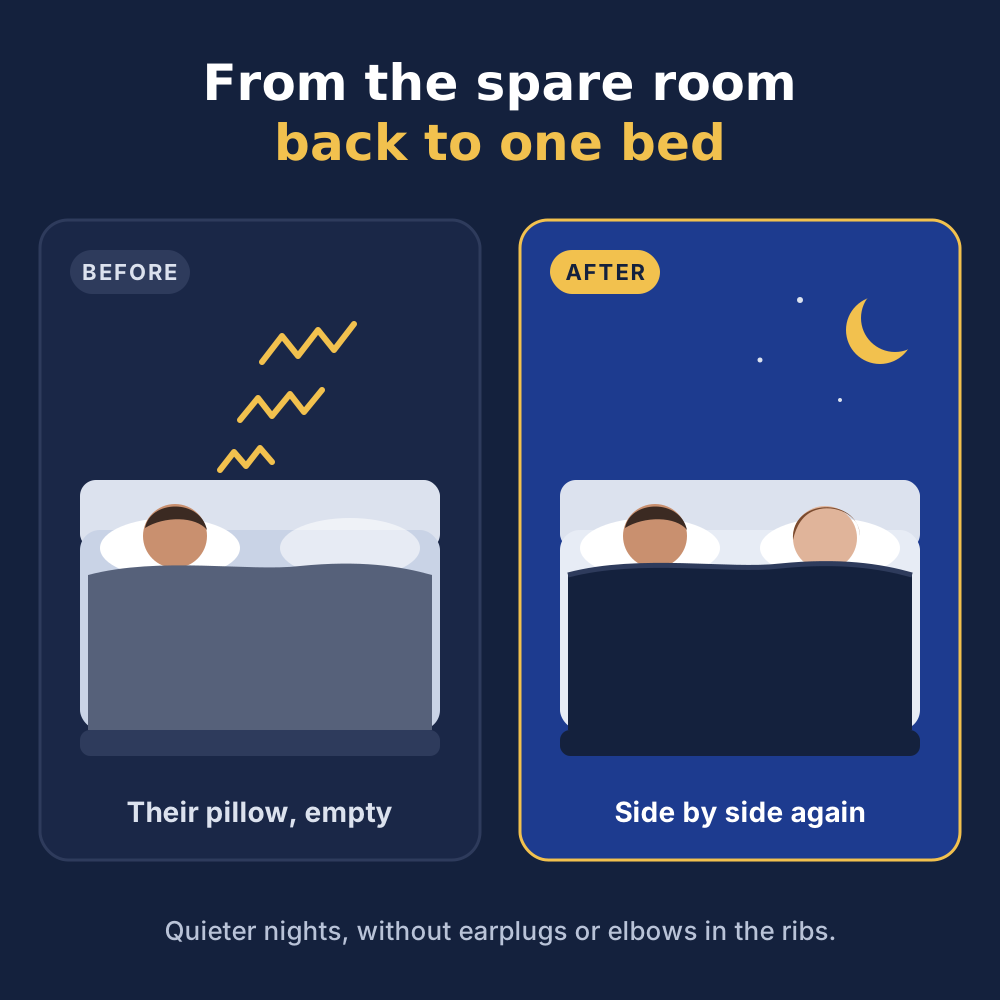
- Sleep side by side again
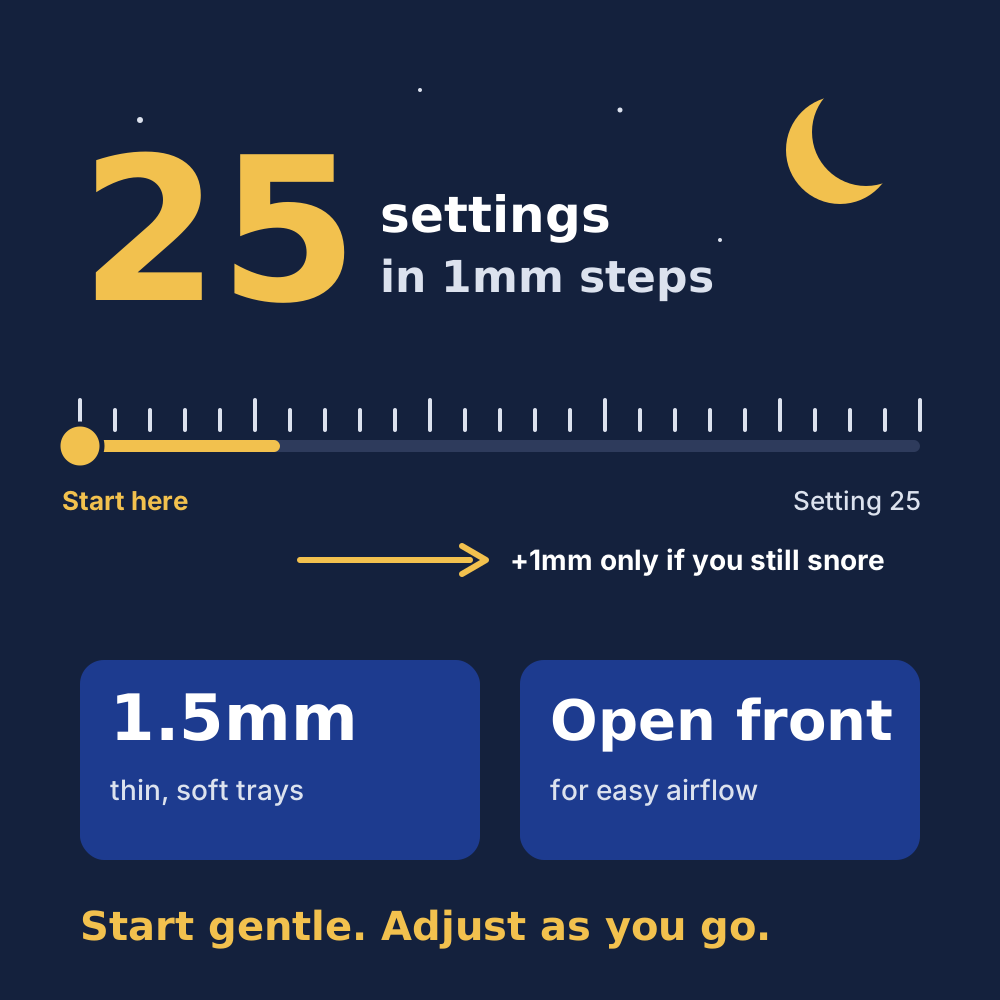
- Comfort you control: 25 settings in 1mm steps
- Thin, open-front trays you can breathe through
- 60 nights to try it, or your money back
From A$25 each · Free shipping US & AU
It's not just your sleep you're losing
If your snoring has turned bedtime into earplugs, white noise and "I'll sleep in the other room tonight", you're not alone. In a 2023 American Academy of Sleep Medicine survey, about a third of US adults said they sleep in a different room from their partner at least sometimes, and snoring is one of the most common reasons. Source
Strips, sprays and pillows often don't help because, for most snorers, the problem starts at the jaw.
How it works
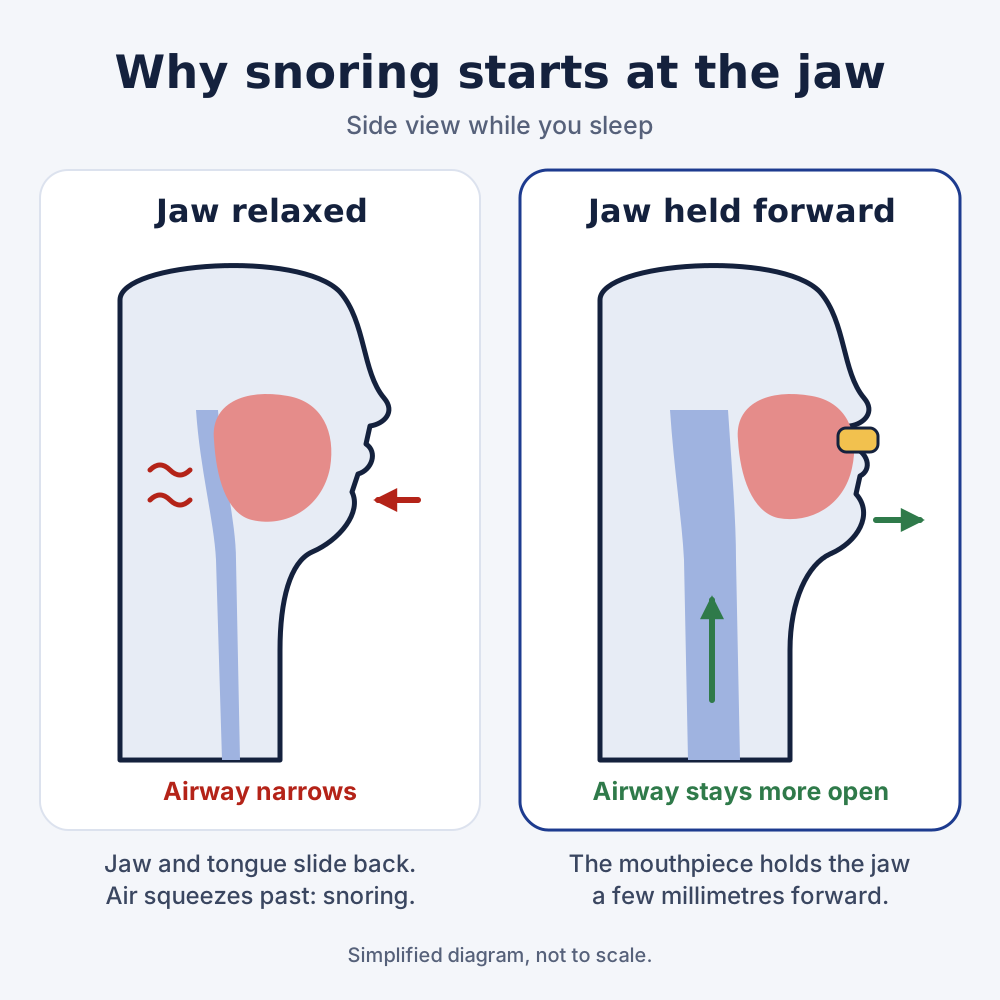
Hold the jaw forward and the airway stays more open
As you fall asleep, your lower jaw relaxes and slides back, pulling your tongue with it. Your airway narrows and the soft tissue vibrates as air squeezes past. That's the snore.
Sleep Snorly holds your lower jaw a few millimetres forward, so there's more room for air to flow. Dentists call this a mandibular advancement device.
The difference is you set how far forward it goes. Start gentle and move 1mm at a time, only as far as you need.
Comfort you control
Start gentle. Move 1mm only if you need to.
Most mouthpieces push your jaw to one fixed position on night one. Sleep Snorly has 25 settings, so you begin at the gentlest and only move forward if you're still snoring.
- 1.5mm-thin trays that take up less room in your mouth
- Open front, so you can still breathe through your mouth
- No boiling or moulding: snap it together and go to sleep
Choose your pack
Buy more, pay less per mouthpiece. Every saving below is worked out from the single-pack price of A$30, with no inflated "was" prices.

What you get
- One adjustable mouthpiece per unit, ready to wear the night it arrives.
- Free shipping to the US and Australia, 7–14 business days.
- Setting tips in the "Using your mouthpiece" section below, so you can find a comfortable setting.

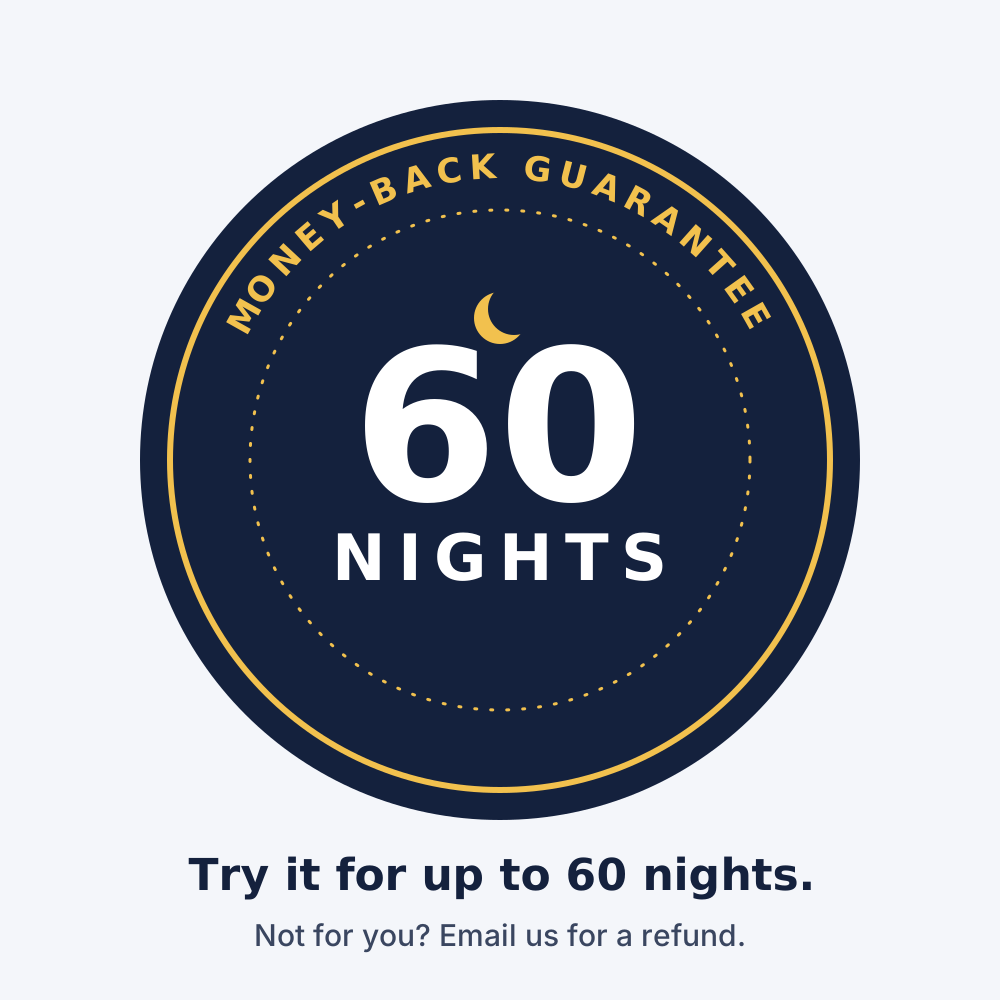
60-night money-back guarantee
Wear it for up to 60 nights. If it doesn't work for you, email us and we'll refund the product price. Refund policy.
Loading prices…
Before you decide
"I've tried snoring products before and nothing worked."
Strips, sprays and pillows don't move your jaw, which is where most snoring starts. If you tried a one-size mouthguard, it may have pushed your jaw too far too fast. This one lets you start gently. And you have 60 nights to find out.
"Won't it hurt my jaw?"
Some soreness in the first days is common with any mouthpiece. That's why there are 25 settings: start low and move forward 1mm at a time. If soreness continues, stop using it and see a dentist.
"Will I be able to sleep with something in my mouth?"
The trays are 1.5mm thin with an open front, so you can breathe through your mouth. Most people need a few nights to get used to it.
"What if it doesn't work for me?"
Email us within 60 nights of delivery and we'll refund the product price.
"How long will it take to arrive?"
Shipping to the US and Australia is free and takes 7–14 business days. Your estimated delivery date is shown next to the Add to Cart button.
What the research says
The evidence behind jaw-forward mouthpieces, and its limits
Important: none of the studies below tested the Snorly QuietFit Mouthpiece itself. Most looked at custom devices fitted by dentists, often in people with sleep apnea. They describe how this type of device works, not a guarantee of your results.
Chaves Jr. et al. (2017): review of mandibular advancement devices
What it did: reviewed published evidence on mandibular advancement devices in adults. What it found: they give the best results for simple snoring and mild to moderate sleep apnea, and people tend to keep using them more than CPAP. Bite and jaw changes were the most common long-term side effects. Limits: mostly custom, dentist-fitted devices. Read the paper
Pahkala (2023): side effects and how far the jaw is moved
What it did: followed 40 adults with sleep apnea using an oral appliance set at 60% of their maximum jaw advancement for a year. What it found: extra saliva, dry mouth and tooth discomfort were the most common side effects; jaw and bite changes were mild. The authors note side effects rise as the jaw is moved further forward, so moderate advancement is recommended. Limits: a small group, custom appliances, sleep apnea patients. Read the paper
Jauhar et al. (2008): 10-year follow-up
What it did: surveyed people given a mandibular advancement device for snoring or sleep apnea 10 years earlier. What it found: a significant number were still using it most nights and few reported problems. Limits: questionnaire-based, many didn't reply, and the devices were dentist-supplied. Read the summary
A 2002 New Zealand study: comfort matters
What it did: tested a mandibular advancement splint in 19 people with sleep apnea. What it found: it reduced snoring loudness and breathing disturbances, but most reported side effects and many didn't wear it every night. Why it matters: a device only helps if you keep wearing it, which is why adjustable, gradual settings matter. Read the abstract
Product certification: FDA-cleared to reduce snoring in adults, 510(k) [NUMBER: add from your supplier's clearance letter]. Material: BPA- and latex-free TPE [keep supplier test certificate on file].
Using your mouthpiece
Which setting should I start on?
Start near the back (the gentlest setting). If your partner says you still snore after a few nights, move forward 1mm. Repeat until it's quiet or you reach the most comfortable setting.
How do I clean it?
Rinse it in cool water every morning, brush it gently, and let it air-dry somewhere clean. Avoid hot water, which can warp it.
How long does a mouthpiece last?
It depends on wear and grinding. Replace it if it cracks, warps or no longer grips well.
Who shouldn't use it?
Don't use it if you have central sleep apnea, severe breathing problems, loose teeth, advanced gum disease, a TMJ disorder, a dental implant under a year old, or if you're under 18.
Could my snoring be sleep apnea?
Possibly. Loud snoring with choking, gasping or pauses in breathing can be a sign of sleep apnea. See a doctor. Sleep Snorly is not a treatment for sleep apnea.
Tonight could be your first quiet night in a while
From A$25 each · Free shipping to the US & Australia · 60-night money-back guarantee
Choose your pack